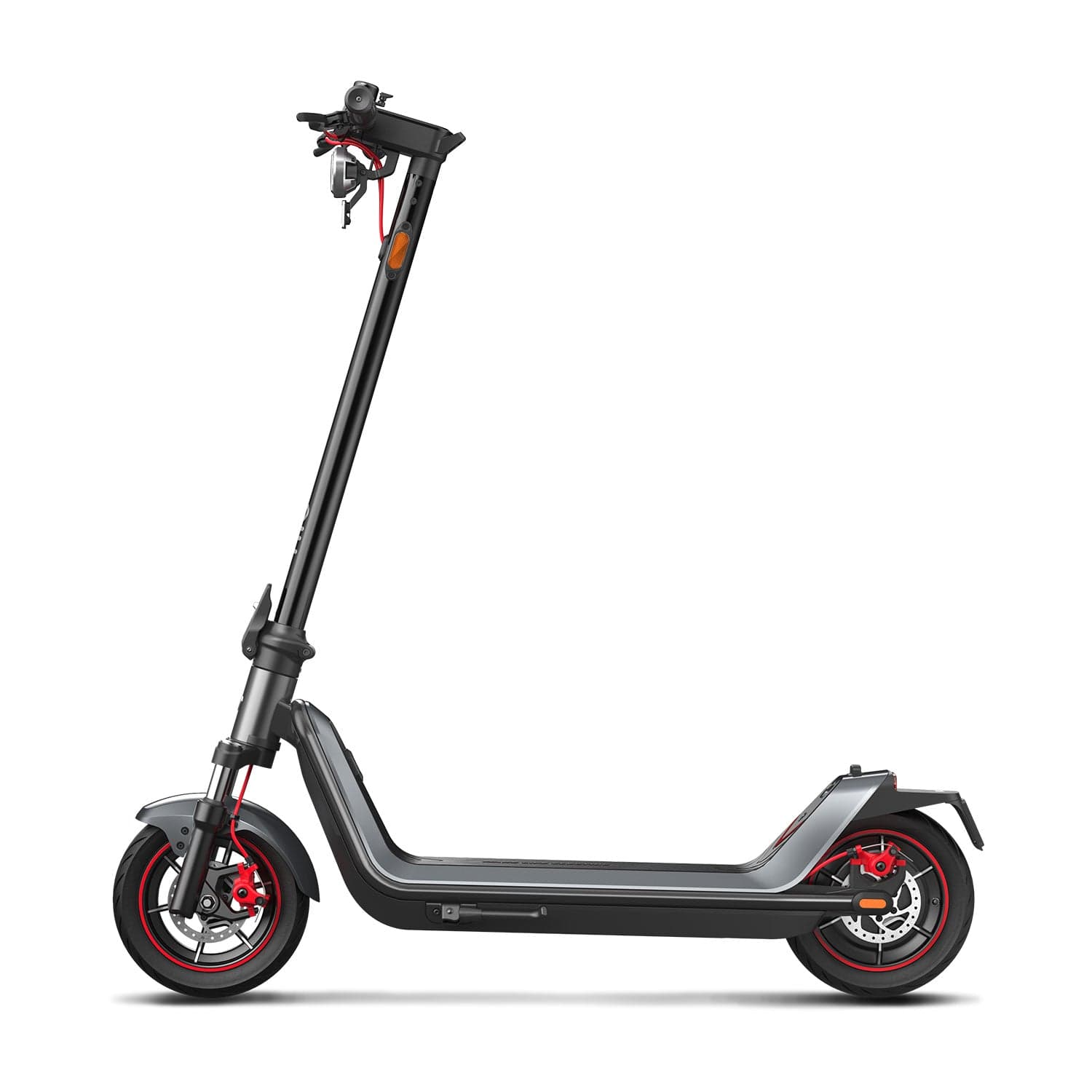
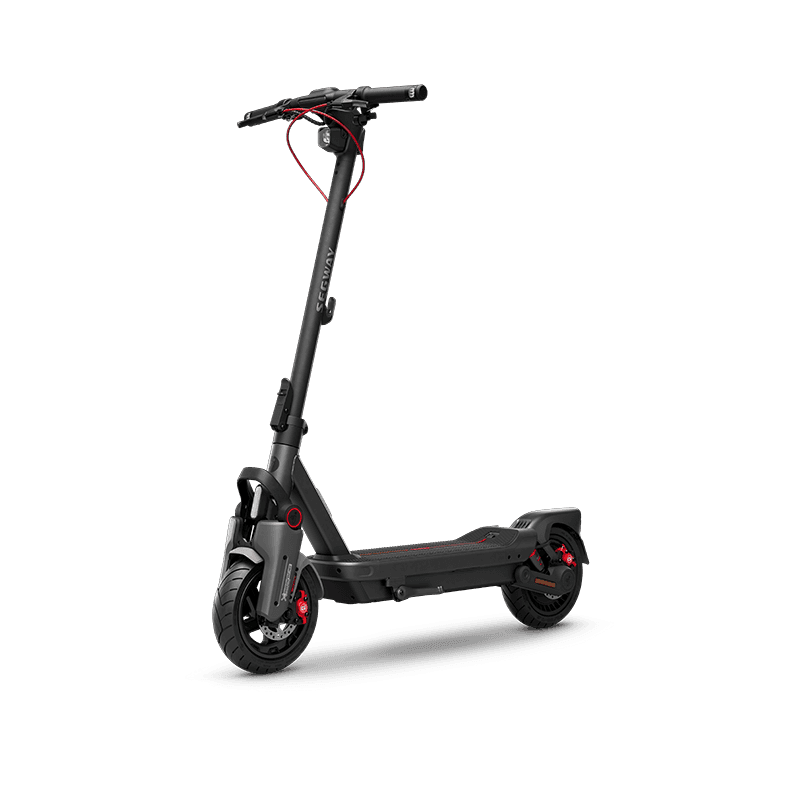
The measured numbers, side by side
| NIU KQi 300X | Segway MAX G3 | |
|---|---|---|
| Claimed range | 37.3 mi | 50 mi (at 10 mph) |
| Manufacturer's own at-speed figure | none published | 25 mi in Sport+ |
| Measured range | 26.8 mi (ERideHero) | 24.9 mi (ERideHero) |
| Claimed top speed | 20 mph on-road per NIU; 23.7 mph recorded by the tester | 28 mph |
| Measured top speed | 23.6 mph | 28 mph |
| Battery | 608.4 Wh | 597 Wh |
| Weight | 48.7 lb | 54.2 lb |
| Suspension | Front | Front and rear adjustable hydraulic |
| Max payload | 265 lb | 286 lb |
Both were measured by the same outlet on the same protocol, which makes this one of the few genuinely like-for-like comparisons available. The NIU went 1.9 miles further despite claiming 12.7 miles less, and it did so carrying 5.5 lb less scooter.
A note on the KQi 300X's speed claim
NIU's own US product page states 20 mph on-road and publishes no unlocked figure, while dealers and reviewers routinely cite 23.7 mph. The measured result was 23.6 mph. The likely explanation is a region-locked default that can be raised, but NIU does not say so on the page, so the claim is reported here as NIU publishes it with the measured figure alongside. If the legal speed limit where you ride is 20 mph, that ambiguity is worth resolving with NIU before buying.
What each one is better at
The NIU KQi 300X is the better commuter on paper and in measurement: further on a charge, 5.5 lb lighter to carry up stairs, 10.5-inch self-healing tubeless tyres, front and rear disc brakes with regenerative braking, and roughly half the price on NIU's own store. Its compromise is suspension — front only — and no published water-resistance rating, which for a commuter that will meet rain is a real gap.
The Segway MAX G3 is the better machine: 28 mph, front and rear adjustable hydraulic suspension, 11-inch tyres, IPX6 sealing, a 286 lb payload, colour TFT display, turn signals, Apple Find My tracking and cruise control. It weighs more and costs more, and it does not go further.
Which to buy
- Buy the NIU KQi 300X for a normal commute. It is the value pick by a wide margin, and the measured range is the best of any scooter in this price class in the index.
- Buy the Segway MAX G3 if you need 28 mph, ride in weather, are near the load limit, or want rear suspension. Verify the state speed limit first.
- Prices on both move sharply. NIU and Segway both discount heavily and inconsistently across their own stores and retail partners; the MAX G3 has listed around $999 at retail against $1,499.99 direct. Check current pricing before deciding on value.
Frequently asked questions
Which has more real range, the NIU KQi 300X or the Segway MAX G3?
The NIU. ERideHero measured 26.8 miles for the KQi 300X and 24.9 for the MAX G3, on the same protocol. The claimed figures, 37.3 and 50 miles, point the other way because Segway quotes its range at 10 mph.
How fast is the NIU KQi 300X?
NIU's own page states 20 mph on-road. The measured figure was 23.6 mph, and dealers commonly list 23.7 mph. NIU does not explain the discrepancy on its product page, so confirm the out-of-the-box speed with NIU if the local limit is 20 mph.
Which is the better commuter scooter?
For most people the KQi 300X: further measured range, 5.5 lb lighter, and roughly half the price. The MAX G3 is the better choice if the route needs 28 mph, includes rough pavement where rear suspension earns its keep, or involves regular rain, where the MAX G3's IPX6 listing matters and the NIU publishes no rating at all.
Ladders for both brands, ranked on measured figures: the whole NIU KQi range and the whole Segway range.
Where the measured figures come from
Electric Scooter Guides does not run instrumented range or speed tests. Every measured figure quoted above belongs to the independent outlet named beside it: ERideHero, RiderGuide and Electric Scooter Guide (a separate publication). The full row-by-row record, with a live link on every figure, is in the measured specification index.
Manufacturer figures are labelled as claims throughout, because across 37 measured runs covering 34 models scooters delivered an average of 64% of claimed range. The mechanism is set out in why range claims are wrong.