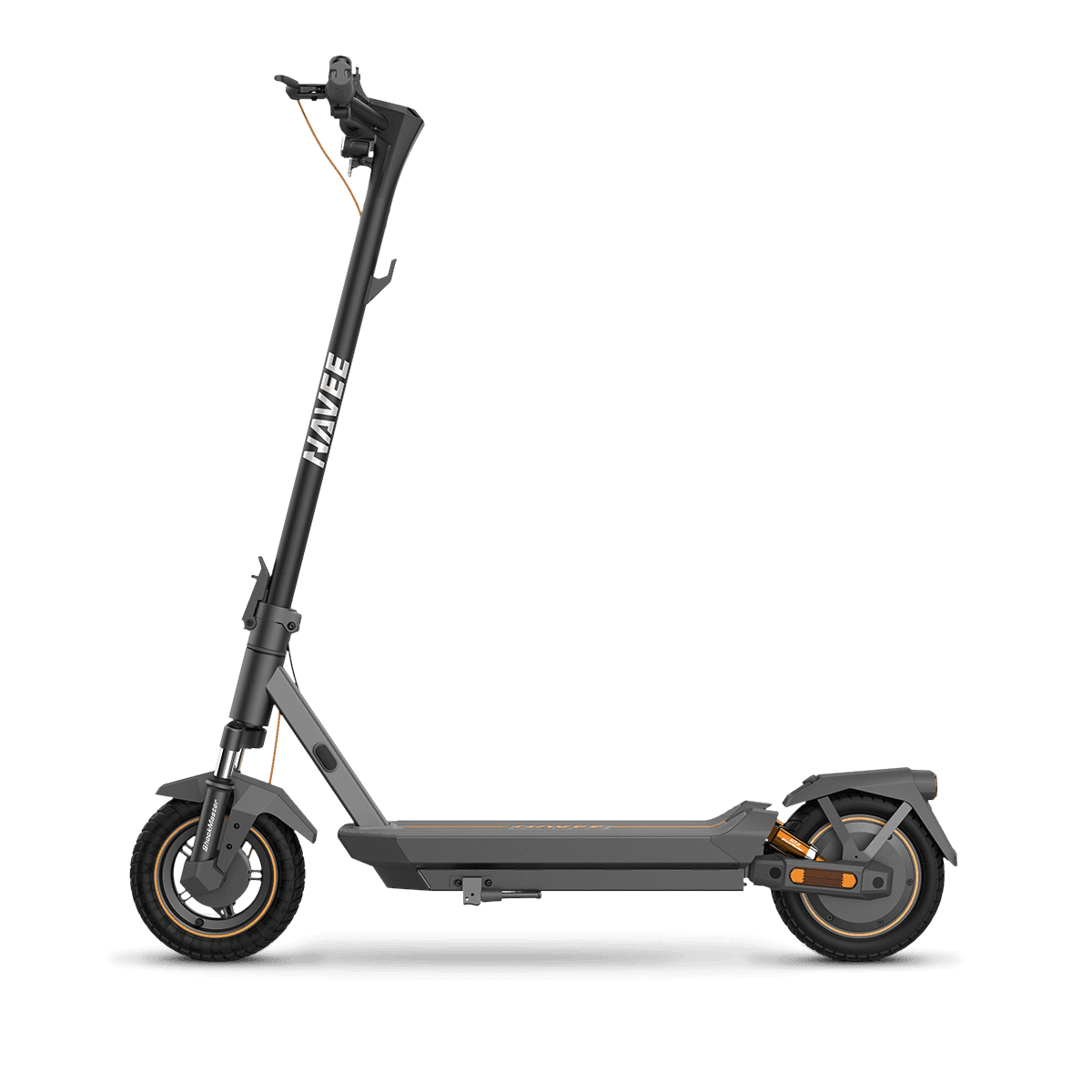
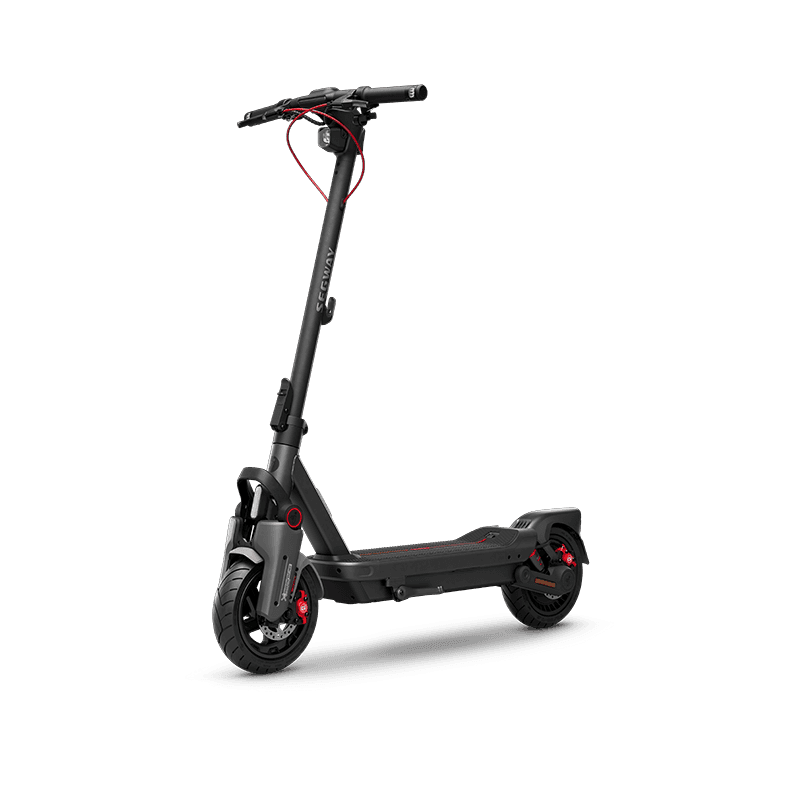
The measured numbers, side by side
The spec table above carries manufacturer claims, as every spec table does. This is what independent outlets recorded after riding both scooters:
| NAVEE GT3 Pro | Segway MAX G3 | |
|---|---|---|
| Claimed range | 37.3 mi (quoted at 9 mph) | 50 mi (quoted at 10 mph) |
| Manufacturer's own at-speed figure | 22 mi at 20 mph | 25 mi in Sport+ |
| Measured range | 23.3 mi (ERideHero) | 24.9 mi (ERideHero) |
| Claimed top speed | 20 mph | 28 mph |
| Measured top speed | 20.6 mph | 28 mph |
| Listed price | $549.99 (NAVEE) | $1,499.99 (Segway store) |
Two things jump out. First, both brands publish an honest at-speed range figure alongside the headline, and both measurements landed on the honest one. Second, the measured range gap between a $550 scooter and a $1,500 scooter is 1.6 miles.
The real difference is speed, not distance
28 mph against 20.6 mph is not a marginal difference; it is the difference between keeping up with city traffic and being overtaken by it. If the commute involves roads where 20 mph is genuinely uncomfortable, the MAX G3 is the answer and the price argument stops mattering.
It also cuts the other way. 28 mph is above the 20 mph line that several US states draw for a street-legal electric scooter, and Segway applies a shipping restriction in New York State for exactly that reason. The GT3 Pro's 20 mph sits inside the common limit almost everywhere. Check which scooters need no licence and street-legal 20 mph scooters before treating the extra speed as a pure upgrade.
What the extra $950 actually buys
Not range. The MAX G3 brings a 597Wh battery against the GT3 Pro's smaller pack, an 850W rated and 2000W peak motor, front and rear adjustable hydraulic suspension, 11-inch self-sealing tubeless tyres, front and rear disc brakes, a colour TFT display, turn signals, Apple Find My tracking, cruise control, an IPX6 water-resistance listing and a 286 lb load rating. The GT3 Pro runs a 1000W motor, 10-inch tubeless tyres, drum and regenerative braking, and front and rear spring suspension.
That is a genuine two-tier difference in ride quality, braking and weather sealing, and it is the honest case for the Segway. What it is not is a range upgrade, and the 50-mile headline is what most buyers think they are paying for.
Which to buy
- Buy the NAVEE GT3 Pro if the commute is under about 15 miles each way, 20 mph is enough, and the budget matters. It delivers 94% of the MAX G3's measured range for roughly a third of the price, and NAVEE is the most honest brand in this category about what its scooters actually do.
- Buy the Segway MAX G3 if you need 28 mph, ride in bad weather, are near the load limit, or want hydraulic suspension and disc brakes. Shop the price hard: the same scooter has listed around $999 at retail against $1,499.99 on Segway's own store.
- Consider neither if the real requirement is distance. Neither breaks 25 measured miles. A swappable-battery scooter solves that; a bigger claim does not.
Frequently asked questions
Which has better real-world range, the NAVEE GT3 Pro or the Segway MAX G3?
The MAX G3, but barely. ERideHero measured 24.9 miles for the MAX G3 and 23.3 miles for the GT3 Pro, a difference of 1.6 miles. The claimed figures, 50 and 37.3 miles, suggest a far bigger gap than exists because both are quoted at around 9 to 10 mph.
Is the Segway MAX G3 worth three times the price of the NAVEE GT3 Pro?
Only for the speed and the build. 28 mph against 20.6 mph is a real difference, as are hydraulic suspension, disc brakes, IPX6 sealing and a 286 lb load rating. If the reason for considering it is the 50-mile range claim, the measured figures say that is not what the money buys.
Is the Segway MAX G3 street legal?
It depends on the state. Its 28 mph top speed is above the 20 mph cap several US states apply to street-legal electric scooters, and Segway restricts shipping to New York State for scooters over 20 mph. The GT3 Pro's 20 mph sits inside the common limit in most places. Verify locally before buying either.
Ladders for both brands, ranked on measured figures: the whole NAVEE range and the whole Segway range.
Where the measured figures come from
Electric Scooter Guides does not run instrumented range or speed tests. Every measured figure quoted above belongs to the independent outlet named beside it: ERideHero, RiderGuide and Electric Scooter Guide (a separate publication). The full row-by-row record, with a live link on every figure, is in the measured specification index.
Manufacturer figures are labelled as claims throughout, because across 37 measured runs covering 34 models scooters delivered an average of 64% of claimed range. The mechanism is set out in why range claims are wrong.